

Voice style directly influences attention, emotion, and message retention in audio content. It is not just about what you say, but exactly how you say it. The right tone can make a listener lean in closer, while the wrong one can make them tune out instantly. It is the bridge between raw data and human connection.
Research from Stanford University and MIT Media Lab confirms that vocal tone affects trust, persuasion, and recall. When the delivery matches the intent, the brain processes the information faster and holds onto it longer. This makes choosing between whisper, motivational, or dramatic styles a critical decision for any content creator.
What Are Voice Styles in Voiceovers
Voice styles are structured vocal delivery patterns defined by tone, pace, pitch, and emotional intensity. They are not random. They are deliberate choices made to guide the listener’s emotional state. When a voice actor or AI engine selects a style, they are manipulating specific audio variables to achieve a psychological effect. It is about controlling how the air hits the microphone and how the sound waves hit the ear.
Key attributes of voice styles include:
- Pitch range: This is the highness or lowness of the voice. A narrow range feels robotic or calm, while a wide range feels expressive and emotional.
- Speaking pace: This is the speed of delivery. Fast speech signals excitement or urgency. Slow speech signals importance, thoughtfulness, or sadness.
- Emotional intensity: This measures the “weight” behind the words. High intensity demands attention; low intensity invites relaxation.
- Listener proximity effect: This simulates how close the speaker is to the listener. A close sound feels intimate and personal. A distant sound feels public or observational.
- Cognitive load impact: This refers to how hard the brain works to process the sound. Clear, simple styles reduce load. Complex or highly emotional styles increase it, forcing the listener to pay more attention.
Understanding these attributes allows creators to reverse-engineer the perfect voice for their script. You don’t just pick “happy.” You pick a specific pitch and pace that signals “happy.”
Whisper Voice Style Explained
What Is a Whisper Voice Style
A whisper voice style uses low volume, breathy tone, and close microphone presence to create intimacy. It sounds like a secret being shared directly into the ear. The speaker minimizes vocal cord vibration and relies heavily on breath. This technique removes the “performance” aspect of speaking. It feels raw and unguarded. It simulates the experience of someone standing right next to you, bypassing the public persona and speaking to the private self.
Psychological Impact of Whisper Voices
Studies in auditory psychology show whispers trigger heightened attention and curiosity due to reduced acoustic energy. Because the sound is quiet, the listener instinctively focuses harder to catch the words. It creates a “lean-in” moment. This style also triggers the parasympathetic nervous system in many people, leading to relaxation. It builds a sense of exclusive trust. If someone whispers to you, you are usually in a safe, private space. The brain associates this sound with safety and closeness.
Best Use Cases for Whisper Voiceovers
- ASMR content: Autonomous Sensory Meridian Response relies entirely on breathy, close-proximity sound to trigger tingles.
- Luxury product ads: High-end brands use whispers to signal exclusivity. It says, “This is for you, not everyone.”
- Meditation and wellness apps: A soft, breathy voice guides users into a state of calm without jarring their senses.
- Personal storytelling videos: When sharing vulnerable or deep personal stories, a whisper feels more authentic than a projected voice.
Limitations of Whisper Voice Style
- Low clarity in noisy environments: If the listener is on a bus or in a gym, a whisper gets lost. It lacks the power to cut through background noise.
- Not suitable for large audience broadcasts: A whisper feels weird if addressed to a crowd. It is a one-on-one style, not a one-to-many style.
Motivational Voice Style Explained
What Is a Motivational Voice Style
A motivational voice style uses energetic pacing, upward pitch variation, and confident articulation. It is the voice of a coach, a leader, or a visionary. The tone is bright, forward, and projected. There is no hesitation. Every word is hit with precision. The pitch often rises at the end of sentences to keep the energy moving forward, rather than dropping down into a resolution. It is designed to wake the listener up and prepare them for physical or mental exertion.
Why Motivational Voices Drive Action
Research from Harvard Business School shows energetic vocal delivery increases persuasion and call to action response. Human beings mirror the energy they hear. When a speaker sounds confident and capable, the listener feels a transfer of that confidence. It exploits the principle of emotional contagion. If the voice sounds like it believes in the message 100%, the listener is statistically more likely to believe it too. It removes doubt and replaces it with momentum.
Best Use Cases for Motivational Voiceovers
- Fitness and coaching videos: You need high energy to push through a workout. A calm voice won’t get you to do that last rep.
- Startup explainer videos: Founders need to sell a vision. An energetic voice makes the future sound exciting and achievable.
- Sales and promo ads: High-energy delivery creates a sense of urgency (FOMO) that drives clicks and purchases.
- Educational content: Keeping students awake during long lessons requires vocal variety and energy to prevent boredom.
Limitations of Motivational Voice Style
- Can feel aggressive if overused: Constant high energy can be exhausting to listen to. It can feel like being shouted at.
- Not ideal for calm or emotional narratives: You cannot use a “hype” voice to talk about sad or serious topics. It creates a tonal clash that ruins trust.
Dramatic Voice Style Explained
What Is a Dramatic Voice Style
A dramatic voice style emphasizes contrast, pauses, deep tonal range, and emotional weight. It is the voice of the storyteller. It uses silence as a weapon. The speaker might go from a loud boom to a quiet growl in the same sentence. The pace is generally slower, allowing each word to land and sink in. It prioritizes the “feeling” of the scene over speed. It sounds cinematic, serious, and substantial. It transforms simple text into an event.
Emotional Engagement of Dramatic Voices
Studies in media psychology show dramatic narration increases emotional memory encoding. When we hear a story told with dramatic weight, our brains treat it as a significant experience. The use of pauses allows the listener’s imagination to fill in the gaps. The deep tonal quality often signals authority and gravity. We remember these voices because they make us feel something profound—fear, awe, sadness, or triumph. It engages the emotional centers of the brain more deeply than a flat delivery.
Best Use Cases for Dramatic Voiceovers
- Movie trailers: The classic “In a world…” delivery is the definition of dramatic style. It sets high stakes immediately.
- Audiobooks: Fiction requires a narrator who can act out the tension in the scenes.
- Story driven brand films: Brands that want to share their history or mission often use a dramatic tone to sound legendary.
- Gaming and cinematic content: Video game intros and cutscenes rely on drama to immerse the player in the fantasy world.
Limitations of Dramatic Voice Style
- Overuse reduces authenticity: If everything sounds like a movie trailer, nothing feels real. It can sound fake or cheesy in a casual context.
- Not suitable for instructional content: You don’t need a dramatic, heavy voice to explain how to change a tire or use software. It becomes distracting.
Whisper vs Motivational vs Dramatic Voice Styles Comparison
Voice style comparison overview
Comparing these styles helps clarify their distinct roles in the audio landscape.
- Whisper focuses on intimacy: It pulls the listener in close. It is about the “Me and You” connection.
- Motivational focuses on action: It pushes the listener forward. It is about the “Let’s Go” impulse.
- Dramatic focuses on emotion: It weighs the listener down with feeling. It is about the “Feel This” experience.
Key comparison factors
- Audience intent: Are they looking to relax (Whisper), get pumped up (Motivational), or get lost in a story (Dramatic)?
- Content format: Short ads benefit from motivational speed. Long stories benefit from dramatic pacing. Intimate confessions benefit from whispers.
- Platform distribution: TikTok and Instagram Reels often favor Motivational or Whisper (ASMR) styles. Theaters and audiobooks favor Dramatic.
- Message urgency: High urgency needs Motivational. Low urgency, high importance needs Dramatic. Zero urgency, high relaxation needs Whisper.
Understanding these trade-offs prevents tonal mismatch. You do not want to whisper a safety warning, and you do not want to scream a bedtime story.
Which Voice Style Works Best for Your Content
The best voice style depends on audience mindset and content objective. There is no single “best” style, only the right tool for the job. You must analyze where your user is physically and mentally when they consume your content. Are they on a noisy train? Are they lying in bed? Are they at the gym?
Selection guidelines
- Use whisper if the goal is personal connection: If you are selling perfume, therapy apps, or high-end jewelry, the whisper builds the necessary bridge of trust and privacy. It works best when the user is wearing headphones.
- Use motivational if the goal is action and energy: If you want a click, a sale, or a subscriber immediately, you need energy. Use this for landing pages, commercials, and hype reels.
- Use dramatic if the goal is emotional storytelling: If you are building a long-term brand identity or telling a complex narrative, drama gives your words weight. Use this for documentaries, mission statements, and fiction.
How AI Voice Platforms Like Speechactors Handle Voice Styles
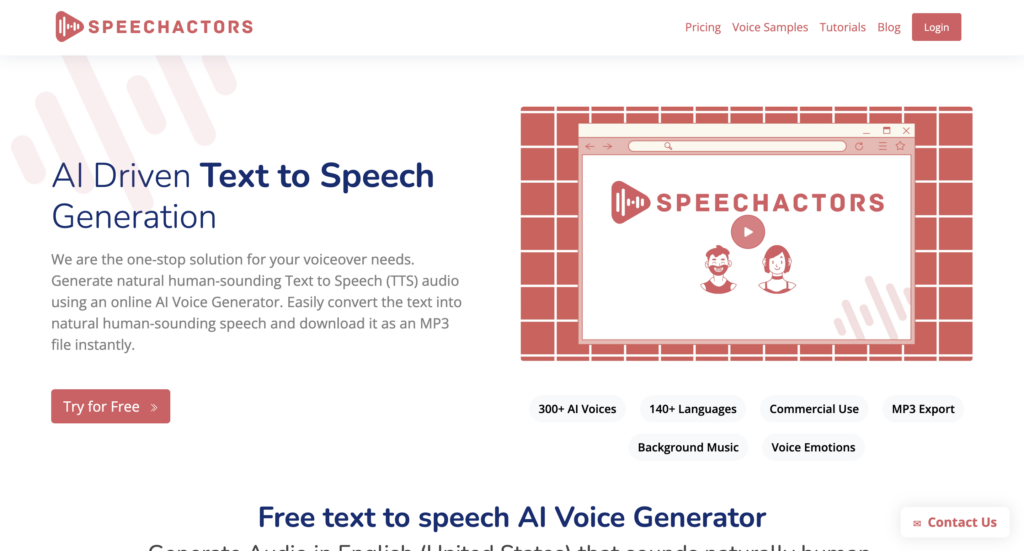
AI voice platforms use prosody control, pitch modulation, and emotional modeling to generate voice styles accurately. In the past, text-to-speech was flat and robotic. Today, engines like Speechactors can deconstruct the nuances of human speech. They analyze thousands of hours of human recordings to understand exactly what makes a voice sound “happy” or “secretive.” They map these traits onto a digital model that users can control.
Speechactors capabilities include:
- Multiple voice styles per script: You are not locked into one tone. You can start a script with a dramatic hook, switch to a motivational middle, and end with a whisper.
- Consistent tone across long form content: Unlike human actors who might get tired and change their pitch, AI maintains the exact style parameters for hours of audio.
- Human like emotional delivery: Advanced algorithms now insert micro-pauses and breath sounds that mimic genuine human emotion.
- Scalable voice generation for marketing teams: You can generate the same script in three different styles in minutes to A/B test which one performs best with your audience.
Future of Voice Styles in AI Voiceovers
Advances in neural speech synthesis allow dynamic voice style switching based on context. The technology is moving away from static “settings” toward real-time adaptation. Soon, AI will be able to read a sentence, understand the sentiment, and automatically apply the correct style without manual input. It will know when to whisper and when to shout based on the text alone.
Research from Google DeepMind and OpenAI shows contextual prosody adaptation improves listener engagement. Their models are learning to predict the “emotional curve” of a paragraph. This means AI voices will sound increasingly indistinguishable from professional voice actors. We will see hyper-personalized content where the voice style adapts to the specific user. A stressed user might hear a calming voice, while a bored user might hear an energetic one. The future is adaptive audio that reacts to the listener.
People Also Ask
Which voice style is best for marketing videos?
Motivational voice style works best for marketing videos because it increases energy and action intent. It drives the user to click the button.
Are whisper voiceovers effective for ads?
Whisper voiceovers are effective for luxury and personal ads due to increased listener focus. They cut through the noise by being quiet.
Do dramatic voices increase engagement?
Dramatic voices increase emotional engagement and story retention in narrative driven content. They make the content memorable.
Conclusion
Choosing the right voice style directly impacts engagement, trust, and conversion. It is a strategic choice, not just an aesthetic one. Your script provides the information, but the voice style provides the instruction on how to feel about that information.
Whisper, motivational, and dramatic voices each serve distinct communication goals. The whisper creates intimacy and focus. The motivational voice drives energy and action. The dramatic voice builds emotion and memory. By aligning your voice choice with your content goals, and utilizing advanced tools like Speechactors, you can ensure your message is not just heard, but felt and acted upon.