
The way people consume content has changed. Most users don’t have the time to sit and read a 2,000-word article, but they do have time to listen. If your content stays only as text, you are ignoring a massive segment of your potential audience.
You spend hours writing great blogs. Why let them sit silently on a page? By turning text into audio, you open doors to new listeners and better engagement. This guide explains how to fix your distribution gaps using Speechactors to turn written words into high-quality audio experiences.
The Rise of Audio Consumption and Why It Matters
We are living in an audio-first world. The numbers regarding podcasts, smart speakers, and mobile listening are exploding. People listen while they commute, cook, or work out. If your content isn’t audible, it isn’t accessible during these “eyes-busy” moments. Audio consumption isn’t just a trend; it is a shift in lifestyle. Users expect to consume information on the go. If you force them to stop and stare at a screen, they often leave.
Beyond convenience, there is the science of learning. Data from various university studies suggests that retention rates improve significantly when users listen to content. It is often called dual-coding. When a user reads and listens simultaneously, the information sticks. Furthermore, we cannot ignore accessibility. Millions of users have visual impairments. For them, a text-only website is a closed door. Speechactors solves these distribution problems by using AI voice generation to instantly make your written content audible, accessible, and engaging for everyone.
What Repurposing Blog Content Into Audio Means
Repurposing content is often misunderstood. It isn’t just about copy-pasting text into a robot voice generator. It is the strategic process of transforming written material into a standalone audio asset. It means taking a blog post that was designed for the eye and converting it into a narrative designed for the ear. This process turns a single digital asset into a multimedia experience.
For brands with high content velocity, this is about efficiency. You don’t need to record a podcast from scratch. You already have the script; it’s on your blog. Repurposing allows you to double your output without doubling your work. Studies consistently show that multimodal formats—content that can be seen and heard—drastically improve engagement metrics. When you define repurposing correctly, it becomes a lever for growth, allowing you to meet your audience exactly where they are, whether that is on a screen or in their headphones.
Core Benefits of Converting Blog Articles to Audio
When you integrate audio into your blogging workflow, the benefits are immediate and measurable. The most obvious benefit is accessibility. You immediately serve a global audience, including those with reading difficulties or visual impairments. But the benefits go deeper than just inclusion.
- Elevated User Engagement: Audio creates a “sticky” experience. Users who might bounce from a text wall will stay to listen. This format is friendly to multitasking, meaning users stay on your site longer while doing other things.
- Improved Session Duration: Analytics don’t lie. When audio is available, session durations increase. Longer time on page signals to search engines that your content is valuable.
- Enhanced SEO: Google values diverse content. Audio embeds and the structured data associated with them help search crawlers understand your page better, potentially leading to higher rankings.
- Consistent Brand Storytelling: Tone matters. With AI voices, you can maintain a consistent brand persona. Speechactors allows you to choose a voice that aligns with your brand, ensuring every blog post sounds like “you.”
How Speechactors Turns Blog Content Into Audio
Speechactors is not a standard text-to-speech tool; it is a platform designed to create natural, human-sounding audio. The core attribute of the system is its engine, which focuses on natural prosody. Standard TTS (Text-to-Speech) often sounds flat and robotic. Speechactors generates audio with the correct pauses, intonation, and expressive delivery that mimics a real human narrator.
The platform capabilities are robust:
- Multi-language Support: You can instantly translate and narrate your blog for international audiences without hiring foreign voice talent.
- Pitch and Style Control: You aren’t stuck with one setting. You can adjust the pitch to sound authoritative or friendly, depending on the topic.
- Long-form Processing: Many tools choke on long articles. Speechactors is built to handle long-form editorial content quickly.
- Voice Cloning: For the ultimate brand consistency, you can clone a specific voice, making the AI narration sound exactly like your CEO or main content creator.
- Flexible Exports: The system exports in high-quality MP3 and WAV formats, making the files ready for any platform.
Step-by-Step Workflow for Repurposing Text Content Using Speechactors
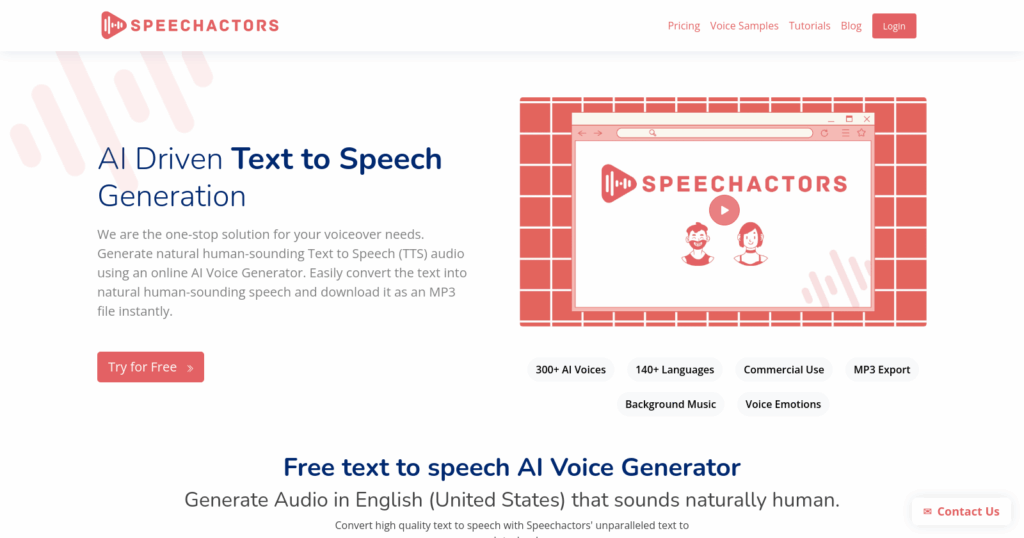
Creating high-quality audio from your blog doesn’t have to be complicated. However, following a specific workflow ensures the final output sounds professional. Here is the factual sequence you should follow:
- Collect the Original Content: Gather the final, approved version of your blog post. Do not work from drafts.
- Edit for Oral Clarity: This is the most important step. Text meant for reading can sound clunky when spoken. Remove things like “as shown in the image below” and replace them with descriptive language. Break up complex paragraphs.
- Choose Your Voice: Log into Speechactors and select a voice model. Listen to samples. Does a deep male voice suit this technical article? Or does a bright female voice suit this lifestyle piece?
- Adjust Settings: Paste your text into the editor. Adjust the pacing. Add pauses where a new section begins to give the listener time to digest information. Use emphasis tags on key keywords.
- Generate and Preview: Render a preview. Listen to it with your eyes closed. Does the flow make sense?
- Refine and Export: Fix any mispronunciations using the phoneme tools. Once satisfied, export the final audio file for your website or podcast feed.
Best Practices for Optimizing Blog to Audio Conversion
Just because AI makes the voice sound human doesn’t mean the writing is ready for audio. You need to apply evidence-based recommendations from communication studies to get the best results. The goal is to reduce cognitive load—the amount of mental effort required to understand the message.
- Shorten Your Sentences: In writing, long sentences are fine. In audio, they are confusing. Break compound sentences into two. This increases listener comprehension significantly.
- Use Active Voice: Passive voice is hard to follow in audio. ” The project was managed by the team” is weaker than “The team managed the project.” Active voice improves clarity.
- Keyword Consistency: Search engines still listen. Ensure your spoken audio contains the same keywords as your text to maintain topic relevance.
- Clear Transitions: In a blog, you have headers. In audio, you need verbal bridges. Use phrases like “Moving on to the next point” to help structure the narrative for the listener.
- Test Multiple Models: Don’t settle on the first voice. Testing different voice models can drastically change how the content is perceived. Find the one that matches your brand’s specific suitability.
Use Cases Where Blog to Audio Repurposing Drives Results
This technology isn’t just for bloggers. Various industries are finding that converting text to audio drives real business results. Here are a few specific examples where Speechactors creates value:
- Publishers and News Sites: Media companies are converting evergreen blogs into serialized audio guides. This turns a dusty archive of articles into a fresh playlist that generates ad revenue.
- SaaS Companies: Technical tutorials can be dry. SaaS marketing teams are adding audio versions of help articles and product walkthroughs. This helps users learn the software faster without switching tabs.
- B2B Marketing: Whitepapers are valuable but boring to read. Marketing teams are creating narrated versions of these assets for LinkedIn. A CEO might not read a PDF, but they will listen to a 5-minute summary while driving.
- Educators and Course Creators: Written lessons are being converted into spoken learning modules. This supports different learning styles and allows students to review material away from the desk.
Integrating Audio Into Websites and Content Platforms
Once you have your audio file from Speechactors, you need a deployment strategy. Having the file is useless if users can’t find it. The most common method is embedding an audio player directly inside the CMS post. This usually goes at the very top of the article, under the headline, with a label like “Listen to this article.”
Beyond the blog post, you can create a podcast feed. You don’t need a microphone to have a podcast. You can aggregate your narrated blogs into an RSS feed and submit them to Spotify and Apple Podcasts. This opens up an entirely new discovery channel. Social media is another massive opportunity. You can take short, narrated clips of your blog and overlay them on video for Instagram Reels, TikTok, or YouTube Shorts. Finally, consider international reach. Generate multilingual audio versions of your product pages to serve customers in their native language without rewriting the text site.
Measuring Performance After Audio Integration
You must track the impact of adding audio. It is not enough to just do it; you need to see the ROI. Start by looking at “Time on Page” metrics. Compare the average time spent on a page before you added the audio player versus after. You will likely see a significant jump.
Look at listener completion rates. If you use a smart player, it will tell you if people stop listening after 30 seconds. This is a direct indicator of your narrative quality. If they drop off, your intro might be too long. Monitor organic traffic growth. Audio contributes to multimodal search presentations. If Google sees you offer both text and audio, you may rank for more queries. Finally, check your accessibility scores and user feedback. Are you getting fewer complaints about readability? Are visually impaired users staying on the site longer? These are the factual data points that prove the strategy works.
Conclusion
Converting blogs to audio is no longer a luxury; it is a strategic necessity. It expands the life of your content, reaches a wider audience, and respects the time of your users. It turns a static website into a dynamic content ecosystem.
Speechactors provides the scalable AI solution needed to make this happen. whether you are a publisher, an educator, a SaaS team, or a solo creator, the ability to generate high-quality, human-sounding audio is now within reach. It removes the barrier of recording studios and voice actors. By integrating audio as a standard step in your editorial workflow, you ensure your message is heard, not just seen. Don’t let your best words go unheard. Start repurposing today.