
The world of synthetic speech is changing incredibly fast. Artificial Intelligence (AI) voice generation is moving beyond simple robot sounds to create truly human-like audio. This technology is no longer a futuristic concept; it’s a critical tool for digital content creators and businesses right now.
The year 2026 is shaping up to be a critical milestone for synthetic speech evolution. We’re expecting major breakthroughs in realism, emotional intelligence, and ethical governance. The growing relevance for advanced platforms like Speechactors in media, business, and automation is clear. The demand for scalable, high-quality audio content is driving an industry shift where authentic digital voices are a necessity, not just an option.
What Is AI Voice Generation?
Clear Explanation of AI Voice Generation
AI voice generation is essentially the creation of artificial human speech using machine learning, specifically deep neural networks. The process takes written text and converts it into a lifelike audio file, simulating the complex patterns and nuances of a real human voice. This technology is a blend of computer science, linguistics, and signal processing, requiring huge amounts of data and computational power to work effectively. The core goal is to produce speech that is indistinguishable from a human recording, managing factors like pacing, breathing, and pitch variations.
The key difference lies between traditional Text-to-Speech (TTS) and modern neural voice synthesis. Traditional TTS used rule-based or concatenative methods, literally stringing together recorded segments of speech, which resulted in that choppy, robotic sound everyone recognizes. Today’s neural models, however, are generative. They learn the intricate, probabilistic relationships between text and sound directly from massive datasets. Core technologies involved include Natural Language Processing (NLP) to understand the text’s meaning and structure, speech synthesis models like Tacotron and WaveNet to create the fundamental acoustic properties, and various forms of Generative AI to refine the output’s quality and naturalness.
Current State of AI Voice Generation in 2025
By 2025, AI voice generation is a mature technology powering countless applications globally. Its adoption is widespread across fields like creating audiobooks without ever stepping into a studio, generating targeted advertising with a custom voice, creating narration for e-learning modules, providing lifelike characters in gaming, and improving the naturalness of virtual assistants. The improvements have been significant, particularly in voice realism, which is how natural the voice sounds; prosody, which refers to the rhythm, stress, and intonation; and robust multilingual support.
Despite impressive advancements, limitations are still present. One major challenge is consistently capturing genuine emotional depth and natural performance inflections, especially for long-form or highly dramatic content. More urgently, the rise of sophisticated voice cloning has created significant ethical concerns surrounding deepfake audio fraud and intellectual property. The industry is currently focused on solving these problems while simultaneously pursuing even greater voice fidelity, pushing the technology towards a new level of sophistication that will truly take off in 2026.
Trend 1: Hyper-Realistic, Human-Like Voices
Advances in Neural Speech Synthesis
The biggest trend is the relentless pursuit of voices that are 100% indistinguishable from human speech. This is being driven by constant advances in neural speech synthesis models, particularly the adoption of advanced transformer-based architectures. These models are far better at capturing the subtle, non-verbal cues in speech—the slight pauses, the inhaled breaths, and the micro-variations in pitch—that make a voice sound truly human. They move beyond simply reading the text correctly to delivering the text naturally. The reduced “robotic tone” and significantly improved emotional expression are key results of this research.
Researchers are making huge strides in generating more realistic vocal texture and delivery style. The difference between a voice that is technically correct and one that is emotionally resonant is where the competition is now focused. Research from institutions like MIT and Stanford is already showing that listeners express higher trust and engagement with AI voices that demonstrate high levels of perceived naturalness and appropriate emotional context. For content creators, this means their AI voiceovers will feel more personal, leading to stronger audience connection.
Trend 2: Emotion-Aware and Context-Adaptive Speech
AI Voices That Adjust to Context
In 2026, AI voices will become more than just expressive; they will be context-adaptive and truly emotion-aware. This means the voice won’t just generate a ‘happy’ tone, but will adjust its tone, pace, and emotional intensity based on the immediate context, punctuation, and intended meaning of the sentence. If a user asks a question with an unexpected error, the AI response can be delivered with a slight, realistic tone of empathetic confusion or concern, rather than a flat, neutral delivery. This is a game-changer for conversational AI.
The practical use cases for emotion-aware speech are vast and have high value in the market. They include delivering more empathetic and effective responses in customer support systems, providing comforting or encouraging narration in mental health and wellness apps, and creating deeply engaging character performances in storytelling and gaming. Numerous studies indicate that emotion-aware speech not only improves user engagement dramatically but also significantly enhances comprehension and retention of information. For any business depending on verbal communication, this capability will move from a luxury to a requirement for competitive advantage in the next year.
Trend 3: Personalized Voice Cloning at Scale
Ethical Voice Cloning Frameworks
Voice cloning is becoming incredibly sophisticated, but the future is defined by ethical and consent-based frameworks to ensure safety. The technology is rapidly maturing to allow for personalized voice cloning at scale, meaning a single, high-quality recording can be used to generate a versatile, licensed voice for any application. Businesses and creators will be able to protect their vocal identity while leveraging AI for content creation. The focus here is on safe and permissioned technology that respects the rights of the original speaker, moving away from unauthorized deepfakes toward a clear, traceable chain of consent for commercial use.
This trend is crucial for establishing custom brand voices for companies and individual creators, ensuring an instantly recognizable and consistent vocal identity across all their digital touchpoints. Platforms like Speechactors will play a vital role here by providing controlled, ethical voice customization and cloning services. This approach guarantees that every generated voice has clear ownership and usage rights, making it reliable for corporate and commercial applications. The ability to create a legally clear, scalable brand voice is a massive competitive advantage, enabling consistent sonic branding across marketing, training, and customer service.
Trend 4: Multilingual and Accent-Adaptive Voice Models
Real-Time Language Switching and Localization
The global digital landscape demands voice technology that can handle language and accent diversity effortlessly. In 2026, we will see a significant leap in multilingual and accent-adaptive voice models. These new models will move past simply having a voice read a text in a different language; they will be capable of real-time language switching and genuine accent localization, producing native-sounding audio in dozens of regional dialects from a single script. For example, a single US-English voice model can be adapted to speak with an authentic Australian or Irish accent, expanding global reach without recording new talent.
This expansion will not be limited to major world languages but will extend into supporting numerous regional and low-resource languages, dramatically improving digital inclusion and market reach. Research coming from global universities and specialized AI labs shows that this improved accessibility through multilingual AI speech will be a key driver for business expansion into non-English speaking markets. For platforms, offering a vast, diverse, and high-quality multilingual voice library is becoming a baseline requirement for success in the international content market.
Trend 5: AI Voice Integration Across Platforms
Growth of Voice-First Interfaces
AI voice is moving beyond simple audio files to become a fundamental layer of the digital experience. We will see deeper integration with emerging platforms like Augmented Reality (AR), Virtual Reality (VR), the metaverse, and a new generation of smart devices. As our interactions with technology become more immersive, the need for realistic, responsive, and contextual voice interactions increases exponentially. The growth of truly voice-first interfaces in standard apps, websites, and enterprise systems means users will increasingly expect to interact by speaking rather than typing or tapping.
The importance of maintaining a consistent brand voice across all channels cannot be overstated. When a user interacts with a brand’s smart speaker, VR experience, and customer service chatbot, the auditory experience needs to be seamless. This consistency builds trust and reinforces brand identity. The trend is for AI voice APIs to become the standard infrastructure, allowing content to be created once and deployed instantly across any platform, from a mobile app to a virtual training environment, all while using that custom, ethically cloned brand voice established in Trend 3.
Trend 6: Ethical AI Voice Standards and Regulation
Global Movement Toward Watermarking and Authentication
As AI voice technology becomes hyper-realistic, the need for robust ethical AI voice standards and regulation is now paramount. The industry is recognizing that public trust is fragile and must be protected. This is driving a global movement toward mandated voice authentication and the technological application of watermarking to all AI-generated audio. This invisible digital signature, which can be instantly detected by an analysis tool, will clearly mark the audio as synthetic, preventing malicious misuse.
The primary goal of these frameworks is to prevent the abuse of the technology, such as deepfake audio fraud, which poses a significant threat to businesses and public figures. Industry-led frameworks, often supported by academic research and governmental policy groups, are being developed rapidly. We expect strong enforcement of regulations, such as those laid out in the EU’s AI Act, which will mandate transparency for generative AI content by 2026. Companies that prioritize transparency and traceability in their voice technology will establish themselves as ethical leaders in the market.
How These Trends Impact Businesses and Creators
Cost Efficiency and Faster Production
The convergence of these trends offers immense benefits to both businesses and content creators. The ability to generate studio-quality, emotionally expressive, multilingual audio on demand translates directly into significant cost efficiency and much faster content production cycles. Instead of scheduling voice actors, booking studios, and managing complex localization workflows, companies can programmatically generate final audio for entire projects in minutes. This speed is vital in the fast-paced digital environment.
This technological leap allows for scalable voice content across marketing campaigns, internal training materials, and digital entertainment. A single source script can instantly produce 50 localized voiceovers for an international ad campaign, or hundreds of training videos, all maintaining a consistent and professional voice. For early adopters using advanced platforms like Speechactors, this creates an undeniable competitive advantage, allowing them to dominate niche content areas and respond to market demands far quicker than competitors relying on legacy human-only voiceover processes.
Why Speechactors Is Positioned for the Future of AI Voice
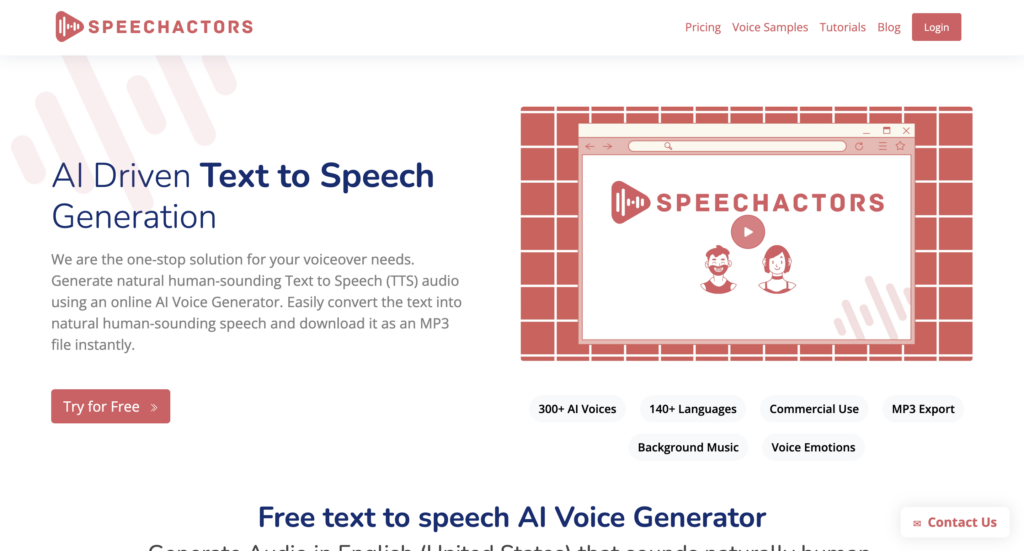
Speechactors is already aligned with the major trends defining the 2026 AI voice landscape. The platform’s core focus is on delivering high-quality, realistic AI voices that incorporate advanced prosody and emotional settings. This allows users to immediately tap into the benefits of Trend 1 and Trend 2, ensuring their content sounds natural and engaging right out of the box. The company’s commitment to providing an extensive library of legally cleared voices and its pursuit of ethical cloning capabilities place it ahead of the curve in meeting the demands of Trend 3 and Trend 6.
Furthermore, Speechactors’ support for numerous languages and content formats naturally positions it to serve the growing global demand highlighted in Trend 4. By offering simple, powerful tools that are easy to integrate into existing workflows, it helps businesses realize the platform-wide integration of Trend 5 without massive technical overhead. The platform provides a responsible, high-fidelity path for brands looking to future-proof their audio content strategy and maintain alignment with ethical and research-backed voice generation practices.
People Also Ask
What will AI voice generation look like in 2026?
AI voice generation in 2026 will feature highly realistic, emotion-aware, and multilingual voices governed by stronger ethical and regulatory standards, making synthetic audio virtually indistinguishable from professional human voice acting.
Is AI voice generation replacing human voice actors?
AI voice generation is largely complementing human voice actors by efficiently handling scalable, repetitive, and utility-based audio tasks (like IVR or e-learning updates). Human voice actors remain essential and irreplaceable for highly creative, high-emotion performances and for providing the source material for ethical AI voice cloning.
How accurate are AI generated voices today?
University research indicates that modern neural voice systems, particularly those using advanced generative models, can achieve over 90 percent listener-perceived naturalness in controlled environments, making them suitable for almost all commercial and entertainment applications.
Conclusion
The future of AI voice generation, set for a major inflection point in 2026, is defined by voices that are not just realistic, but truly intelligent.
The key trends shaping this landscape are clear:
- Hyper-Realistic Voices that are indistinguishable from humans.
- Emotion-Aware Speech that understands and responds to context.
- Ethical Voice Cloning that gives brands a legally clear, consistent voice.
- Multilingual Mastery to power true global content localization.
- Seamless Integration across every digital and immersive platform.
- Strong Ethical Standards to secure trust through watermarking and regulation.
Choosing the right partner now is crucial. To remain competitive, businesses must select a reliable and future-ready voice platform that embraces these technical and ethical shifts. Speechactors is positioned to support this next generation of voice content, offering the scalable, high-quality, and ethical voice technology needed to succeed in the demanding digital world of 2026 and beyond.