
Podcasting has exploded, but sticking to just one language limits your potential reach. If you want to grow, going global is the only way forward. However, hiring voice actors for five or six different languages is expensive and a logistical nightmare for most creators.
That is where tools like Speechactors come in. It allows you to produce high-quality, natural-sounding audio in multiple languages without the massive overhead. In this guide, we will walk you through exactly how to use Speechactors to launch and scale a multilingual podcast series efficiently.
What Is a Multilingual Podcast Series
A multilingual podcast series is simply a show that is published in more than one language to connect with listeners across different regions and cultures. It is not about creating different shows for different people; it is about taking your core message and making it accessible to everyone, regardless of the language they speak.
The key to a successful multilingual series is consistency. You take the same core content your episodes, interviews, or narratives and adapt them. This requires more than just translation. It requires native-level pronunciation and a tone that fits the local culture. Whether a listener tunes in from Madrid or Mexico City, the branding and “feel” of the show must remain consistent. This approach builds trust and authority, establishing your brand as a truly global player rather than just a local expert.
Challenges in Creating Multilingual Podcasts
Producing a podcast in one language is hard enough. When you try to do it in three or four, the complexity skyrockets. You face technical, linguistic, and operational hurdles that can quickly derail a project if you aren’t prepared. The biggest hurdle is almost always the human element.
Hiring and managing multiple voice artists is a full-time job. You have to find talent, negotiate rates, and schedule recording sessions across different time zones. Even when you find them, maintaining a consistent tone is difficult. One actor might speak fast and energetically, while another is slow and somber. This creates a disjointed brand experience. Additionally, the costs add up fast. High production costs per episode and long turnaround times for edits make traditional localization hard to scale for independent creators and small businesses.
What Is Speechactors and How It Works
Speechactors is an AI-powered voice platform designed to solve these exact problems. It generates natural-sounding speech using advanced neural text-to-speech (TTS) technology. Unlike the robotic voices of the past, these voices breathe, pause, and intonate just like a real person.
The platform works by converting your written text into studio-grade audio files. Its core capabilities are built for creators who need scale. You get access to multilingual AI voice generation with granular control over regional accents and pronunciation. This means you can create a “British English” version and an “Indian English” version of the same script with just a few clicks. The output is clean, professional, and ready for broadcast, ensuring scalable voice consistency across every episode you publish.
Why Use Speechactors for Multilingual Podcast Series
Using Speechactors isn’t just about saving money; it is about efficiency and standardization. For a podcast series, you need a reliable workflow that lets you publish on time, every time. Speechactors enables podcast localization at a scale that simply isn’t possible with human talent alone.
The benefits are backed by data. Research suggests that AI speech synthesis can reduce production time by up to 70 percent compared to traditional recording methods. You skip the scheduling, the studio setup, and the re-takes. Furthermore, consistency matters. Studies from groups like NPR have shown that a consistent voice identity helps listeners bond with a show, improving retention. With AI, that voice never gets sick, never has a bad day, and sounds exactly the same in Episode 100 as it did in Episode 1.
Supported Languages and Accents in Speechactors
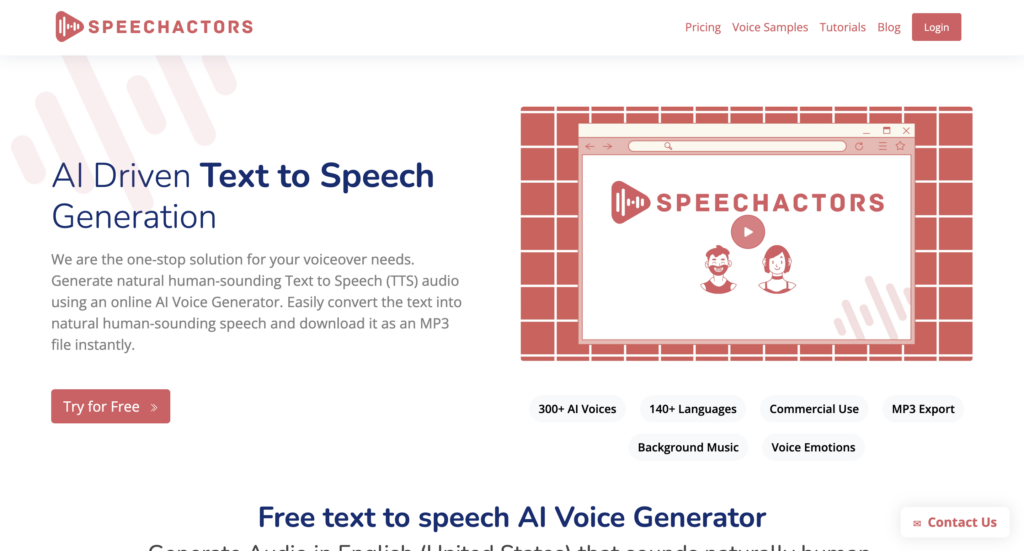
One of the strongest features of Speechactors is its library. It supports a massive range of global languages and regional accents, which is critical for true localization. A generic “Spanish” voice won’t work if your target audience is in Buenos Aires; you need a specific Latin American accent.
Here are just a few examples of the variety available:
- English: Distinct accents for the United States, United Kingdom, Australia, and India.
- Spanish: Variants for Latin America and Spain.
- French: Options for France and Canada.
- German: Standard German voices.
- Hindi: Natural-sounding voices for Indian audiences.
- Arabic: Modern Standard Arabic for the MENA region.
This variety allows you to fine-tune your content so it resonates on a local level, rather than sounding like a generic translation.
Step by Step Process to Create a Multilingual Podcast Using Speechactors
Creating a multilingual series might sound technical, but with Speechactors, it follows a logical, linear workflow.
Step 1 – Prepare the Original Podcast Script
Everything starts with the text. Create a clean, structured master script. Be sure to include clear tone instructions mark where you want excitement, pauses, or emphasis. The better your input, the better the AI output.
Step 2 – Translate the Script Accurately
Do not rely on basic auto-translate tools. Use professional translation or a human-reviewed AI translation service. You need to maintain the cultural context and idioms. A joke in English might not land in Japanese, so adapt the meaning, not just the words.
Step 3 – Select Language Specific AI Voices in Speechactors
Log in to Speechactors and browse the voice library. Choose voices that match your podcast’s style. If you are doing a history show, you might want a deep, narrative voice. For a tech update, a crisp, conversational tone works better.
Step 4 – Generate Audio Using Speechactors
Copy your translated scripts into the tool. Hit generate. The engine will convert your text into natural-sounding audio files in seconds.
Step 5 – Review Pronunciation and Pacing
Listen to the output carefully. You can adjust the speed, add pauses for dramatic effect, or tweak the pronunciation of specific proper nouns or technical terms. This step ensures the pacing matches native listening patterns.
Step 6 – Publish and Distribute Across Platforms
Once you have your audio files, export them. Upload your language-specific episodes to major platforms like Spotify, Apple Podcasts, and Google Podcasts.
Best Practices for Multilingual Podcast Production
To ensure your series sounds professional, you need to follow some structured best practices. First, try to maintain identical episode lengths across languages. This makes your production schedule predictable.
Second, use consistent intro and outro branding. The music and sound effects should be the same, even if the voiceover language changes. This ties the brand together. Third, always test your audio quality with a native listener before launching a new language. They can catch subtle errors an AI might miss. Finally, standardize your naming conventions. Label files clearly (e.g., “Ep1_Spanish,” “Ep1_French”) so your team never uploads the wrong file to the wrong feed.
SEO and Discoverability for Multilingual Podcasts
Making the podcast is half the battle; people also need to find it. Optimizing your multilingual content improves global reach and drives organic discovery.
Focus on these key strategies:
- Localized Titles: Don’t just translate the title; localize it for search intent in that region.
- Keywords: Use localized keywords in your descriptions. What a user searches for in Germany might differ from a user in Brazil.
- RSS Feeds: Create separate RSS feeds for each language. This allows listeners to subscribe only to the language they understand, which boosts retention rates.
- Structured Data: Use schema markup on your website to help search engines understand that these are podcast episodes in specific languages.
Use Cases for Multilingual Podcasts with Speechactors
Who actually benefits from this? The use cases are vast.
- Education: eLearning platforms use it to convert lessons into audio for students worldwide.
- SaaS Products: Tech companies create product updates and tutorials in local languages to support global users.
- Internal Comms: Large corporations use it to ensure every employee, from Tokyo to Toronto, gets the CEO’s update in their native tongue.
- News: Media publishers can instantly convert written articles into daily audio news briefs for different regions.
- Health: Wellness apps use it for guided meditations in multiple languages.
Cost and Scalability Advantages of Speechactors
The bottom line often drives the decision, and here, AI wins. AI voice generation significantly reduces long-term podcast production costs.
The advantages are verified and clear. You eliminate recurring voice talent fees. You don’t have to pay royalties or per-word rates. You also get unlimited episode scaling; producing 10 episodes costs the same effort per unit as producing one. This allows for faster content iteration. If you need to update a statistic in an old episode, you just change the text and regenerate the audio. You don’t have to re-hire an actor. This leads to predictable production budgets year-round.
Compliance and Audio Quality Standards
Professional podcasters worry about quality. Speechactors produces broadcast-ready audio that meets strict standards.
Technically, the output offers high sample rates suitable for all major streaming platforms. It provides consistent loudness levels, which is crucial for passing the audio submission standards of Apple and Spotify. The synthesis is noise-free, meaning you don’t have to spend hours cleaning up background hiss or pop sounds that are common in home studio recordings.
Future of Multilingual Podcasting with AI Voices
AI-driven speech synthesis is rapidly becoming the standard tool for global audio content. It is no longer a “nice to have” it is a competitive necessity.
Research from institutes like Stanford HAI reports that the naturalness of multilingual speech is improving year over year. As the tech gets better, the line between human and AI audio will blur even further. This democratization of localization means that content accessibility will increase across emerging markets, allowing creators to reach billions of non-English speakers who were previously ignored.
Conclusion
Expanding your podcast into new languages doesn’t have to be expensive or complicated. Speechactors provides a reliable, scalable solution for creating multilingual podcast series with consistent voice quality. By leveraging AI, you can break down language barriers, control your budget, and truly reach a global audience. The world is listening make sure they can understand you.
People Also Ask
What is the best way to create a multilingual podcast?
The most efficient way is using AI voice platforms like Speechactors. They allow you to generate consistent, high-quality audio across dozens of languages without the need to hire multiple voice actors.
Can AI voices be used for professional podcasts?
Yes, absolutely. AI voices are now widely used in professional broadcasting and corporate podcasts due to their improved naturalness and studio-grade audio output.
Does multilingual podcasting increase audience reach?
Yes. Multilingual podcasts significantly expand your audience reach. By removing language barriers, you make your content accessible to millions of listeners who prefer consuming content in their native tongue.