
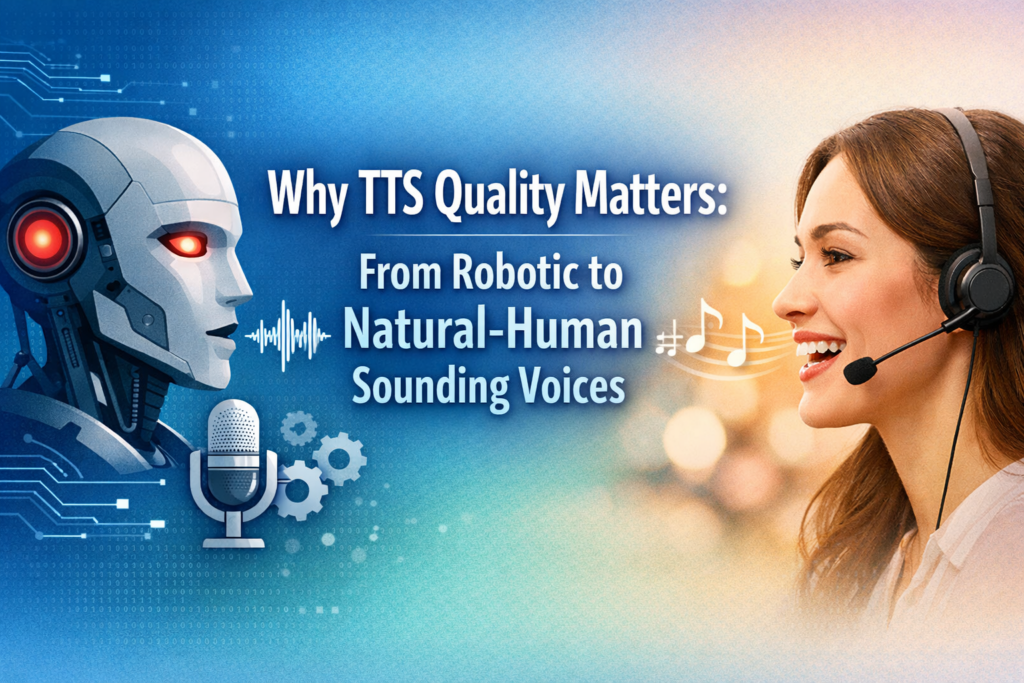
High-quality text to speech determines how listeners perceive digital audio across media, education, marketing, and accessibility platforms.
The difference between a user staying on your page or clicking away often comes down to the voice they hear. For years, digital voices were the punchline of bad jokes clunky, awkward, and obviously fake. Today, they are the backbone of modern content consumption. Whether you are a creator, a marketer, or an educator, understanding the shift from robotic sounds to human-like audio is no longer optional; it is a necessity for keeping your audience engaged.
What Is Text to Speech Technology
Text to speech (TTS) is an AI-driven technology that converts written text into spoken audio using synthetic voice models trained on human speech data. It reads digital text aloud, transforming articles, scripts, and documents into accessible audio files.
Modern TTS does more than just read words. It analyzes the context of a sentence to determine how it should be spoken. This ensures that a question sounds like a question and a joke sounds like a joke. It bridges the gap between written information and auditory learning, making content accessible to everyone, everywhere.
The Evolution of TTS Quality
Text to speech has evolved from rule-based monotone systems to neural network-driven natural voice synthesis. The journey has been rapid, moving from voices that sounded like broken machines to ones that are nearly indistinguishable from real people.
Early Robotic TTS Systems
Early systems used “phoneme stitching” and fixed prosody, resulting in flat and mechanical voices. These older models worked by recording individual sounds (phonemes) and pasting them together to form words. The result was choppy audio with awkward pauses. There was no flow, no rhythm, and definitely no emotion. It got the job done for basic navigation, but it was impossible to listen to for long periods.
Modern Neural TTS Models
Deep learning models such as Tacotron and WaveNet generate natural intonation, pacing, and emotional variation. Instead of cutting up sounds, these neural networks learn how to speak by analyzing vast amounts of human speech data. They understand the nuances of language. They know where to take a breath, how to stress important words, and how to change their tone based on the punctuation.
Why TTS Quality Matters
High-quality TTS directly affects comprehension, engagement, and user trust across digital experiences. If a voice sounds fake, listeners tune out. If it sounds real, they listen longer and retain more information.
Improved Listener Engagement
Studies from Stanford University regarding natural language processing suggest that natural speech patterns significantly increase listener attention and retention. When a voice flows naturally, the human brain processes it more easily. We don’t have to work hard to understand the words, so we can focus on the message. Robotic voices cause “listening fatigue,” forcing users to stop listening simply because the audio is exhausting to process.
Higher Content Credibility
Human-sounding voices increase perceived authenticity, a concept supported by MIT Media Lab research on audio interfaces and human-computer interaction. People trust humans, not machines. When your brand’s voice sounds like a person, it builds an immediate connection. A mechanical voice creates distance and can make even high-quality written content seem cheap or spammy.
Better Accessibility Outcomes
Clear and natural speech improves comprehension for visually impaired users and language learners. For those who rely on screen readers, the quality of the voice is their window to the world. A natural voice clarifies complex words and distinguishes between homographs (like “read” vs. “read”), which is critical for accurate understanding.
Robotic Voices vs Natural Human Sounding Voices
The difference between robotic and natural TTS lies in prosody, emotion, and contextual awareness. It isn’t just about the sound of the voice; it is about the delivery of the message.
Key Attributes of Robotic Voices
- Monotone pitch: The voice stays on one note, making it boring.
- Unnatural pauses: Breaks occur in the middle of phrases, disrupting the flow.
- Lack of emotional variation: Sad news and happy news sound exactly the same.
- Low listener engagement: Users quickly lose interest and stop listening.
Key Attributes of Natural Human Sounding Voices
- Dynamic intonation: Pitch rises and falls naturally to emphasize meaning.
- Context-aware pacing: The voice speeds up or slows down based on the sentence structure.
- Emotion simulation: The voice can sound excited, serious, or empathetic.
- High clarity and realism: It sounds like a professional recording, not a computer program.
Core Factors That Define High Quality TTS
High-quality TTS is built on multiple technical and linguistic components. It is a mix of art and science that comes together to create a seamless listening experience.
Prosody and Intonation
Proper stress, rhythm, and pitch variation mirror real human speech patterns. Prosody is the “music” of speech. It is the difference between a statement and a question. High-quality TTS gets this right every time, ensuring the melody of the sentence matches its meaning.
Pronunciation Accuracy
Correct phoneme generation ensures clarity across accents and industries. Whether it is medical terminology or a unique brand name, good TTS models pronounce words correctly. They handle complex linguistic rules without stumbling, which is essential for professional credibility.
Emotional Expression
Advanced models simulate calm, excitement, seriousness, or empathy based on context. A scary story needs a different voice than a corporate earning report. Top-tier TTS tools allow you to adjust the “mood” of the voice to fit the content, making the audio more impactful.
Consistency Across Long Form Audio
High-quality voices maintain tone stability in audiobooks, podcasts, and eLearning. A common issue with low-quality TTS is that the voice degrades over time or glitches on long paragraphs. Premium engines stay consistent from the first word to the last, ensuring a smooth experience for long-form content.
Use Cases Where TTS Quality Is Critical
TTS quality directly impacts performance in professional and commercial environments. The stakes are high; bad audio can ruin a good product.
Marketing and Advertising
Natural voices increase ad recall and conversion rates. In a crowded feed, a pleasant, human-like voice stands out. It captures attention quickly and delivers the pitch effectively. Robotic voices in ads are often ignored or skipped immediately.
Audiobooks and Storytelling
Human-sounding narration improves immersion and listening duration. Listeners want to get lost in a story. If the narrator sounds like a GPS, the immersion breaks. Natural TTS allows independent authors to produce audiobooks that rival major studio productions.
Corporate Training and eLearning
Clear speech enhances knowledge retention and learner satisfaction. Employees learn better when the instructor is easy to understand. Natural voices make training modules feel less like a chore and more like a seminar, improving completion rates.
Accessibility and Assistive Technology
Natural voices reduce cognitive fatigue for daily users. For people who use TTS all day, a harsh robotic voice is physically draining. Smooth, natural audio makes technology usable and comfortable for long-term use.
How Speechactors Delivers High Quality TTS
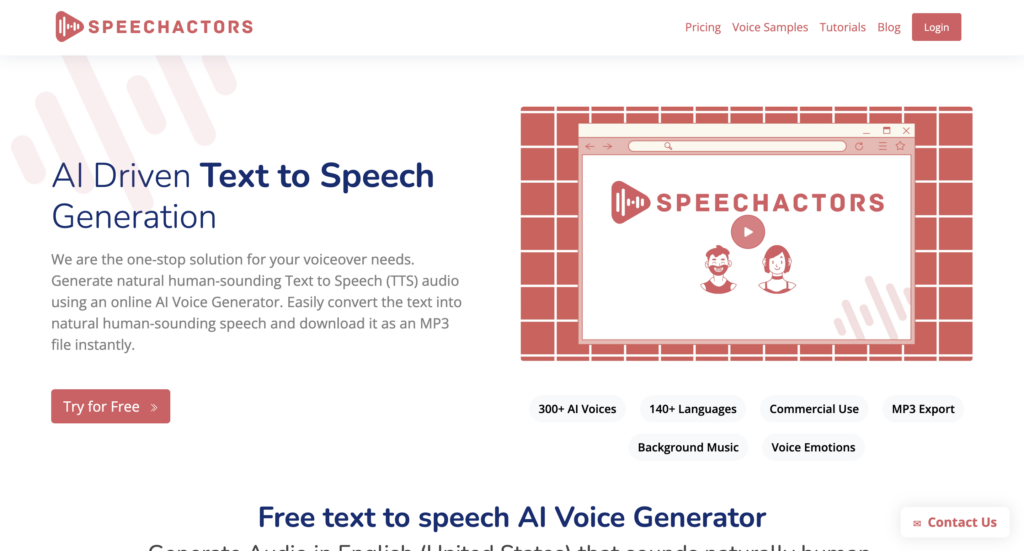
Speechactors uses advanced neural voice models designed to produce natural human-sounding speech at scale. It is built for creators who refuse to compromise on audio quality.
AI Trained Human Voice Models
Voices are trained on real human speech datasets for realism and accuracy. Speechactors doesn’t just synthesize sound; it replicates the nuance of professional voice actors. This results in audio that carries the warmth and weight of a real person.
Multiple Accents and Voice Styles
Support for global accents ensures cultural and linguistic relevance. With over 140 languages and accents, you can localize your content instantly. Whether you need a British accent for a documentary or an American accent for a sales video, the platform delivers authentic regional sounds.
Studio Grade Audio Output
Speechactors provides clean, broadcast-ready audio suitable for professional use. The output is free from the static, hiss, or background noise often found in cheaper tools. You get crisp MP3s that are ready to drag and drop into your video editor or podcast host.
How to Choose the Right TTS Platform
Selecting the right TTS solution requires evaluating quality, flexibility, and output consistency. Not all engines are created equal.
Evaluation Criteria
- Voice naturalness: Does it sound like a person or a robot? Always listen to samples first.
- Customization options: Can you change the speed, pitch, and pauses?
- Language and accent support: Does it cover the regions you are targeting?
- Audio clarity: Is the downloaded file high quality?
Future of Text to Speech Quality
Ongoing research in emotional AI and speech synthesis will further close the gap between human and synthetic voices. We are moving toward a future where “voice cloning” becomes standard, allowing for hyper-personalized audio experiences. Soon, TTS won’t just read text; it will act it out with full theatrical capability.
People Also Ask
Why is text to speech quality important
Text to speech quality matters because natural voices improve comprehension, engagement, and user trust. Listeners engage longer with audio that sounds human rather than mechanical.
What makes a TTS voice sound human
A TTS voice sounds human when it includes natural prosody, accurate pronunciation, and emotional variation. It mimics the rhythm and breathing patterns of real speech.
Is AI text to speech better than traditional voice recording
AI text to speech provides scalable, consistent, and cost-effective audio while maintaining natural sound quality. It allows for instant updates and multilingual versions without rehiring actors.
Conclusion
High-quality text-to-speech transforms digital audio from robotic output into natural, human-sounding communication, improving engagement, trust, and accessibility. Investing in the right voice technology is an investment in your audience’s experience. When your content speaks clearly and naturally, the world listens.