
The world of content is rapidly going auditory. From podcasts and audiobooks to customer service bots and in-app navigation, AI-generated voices are everywhere. But if your AI voice sounds robotic, monotone, or just plain boring, you are losing listeners fast. The secret to keeping people hooked isn’t just about the words being spoken, it’s about the voice tone and style you choose.
Getting the tone and style right transforms a simple text-to-speech output into a truly engaging experience. This isn’t just a technical detail; it’s a critical factor for user retention, brand trust, and communication effectiveness. By applying research-backed principles to your AI voice design, you can make your audience listen longer, understand better, and feel a genuine connection to your brand’s auditory persona. This detailed guide will show you exactly how to optimize your AI voices for maximum listener engagement.
👂 Understanding Listener Engagement in AI Voice Technology
Listener engagement is more than just a buzzword; it’s the measure of how successfully your AI-generated speech captures and holds a user’s attention. Think about it: when someone quickly hangs up on a customer service bot or skips a podcast segment, that’s a direct failure of engagement. We’re talking about how long people listen, how well they absorb the message, and how positively they feel about the interaction.
This crucial metric is directly tied to the perceived “humanness” of the voice. If a voice is flat and unnatural, the listener’s brain works harder, leading to fatigue and disengagement. High engagement means the voice feels natural, appropriate to the context, and easy on the ear. Studies from leading institutions like the University of California have consistently shown that using natural prosody the rhythm, stress, and intonation of speech and a contextual tone can boost engagement in voice-based interfaces by over 30 percent.
This means an AI voice that correctly stresses keywords and uses natural pitch variation is nearly one-third more effective than a dull, robotic one. For businesses, this translates directly into higher conversion rates, longer time spent on content, and improved user satisfaction scores. It’s a clear case: natural, context-aware speech is the foundation of effective AI-human communication.
Key engagement metrics influenced by voice design
- Listening Duration: How long a user stays actively listening to the content, directly correlating with lower bounce rates in audio applications.
- Emotional Response: The positive or negative feeling the voice evokes, which builds or breaks rapport and brand loyalty.
- Message Recall: The listener’s ability to remember key information, which is vital for educational or instructional content.
- User Trust and Credibility: The perception of the AI’s competence and honesty, heavily influenced by the voice’s perceived sincerity and clarity.
Why Voice Tone Matters in AI Generated Speech
Voice tone is the emotional fingerprint of spoken output. It’s not about what is said, but how it’s said. Tone conveys underlying intent—whether the voice is excited, serious, calming, or urgent. An AI voice might read the perfect script, but if the tone is wrong, the entire message is misinterpreted. For example, delivering a congratulations message in a flat, monotone voice makes the praise sound insincere and hollow. Similarly, an overly cheerful tone for a customer complaint will only increase the user’s frustration. This is why tone is paramount.
Research from Harvard linguistics programs confirms that a monotonic delivery causes listener attention to drop off significantly, as the brain finds it difficult to process and prioritize the incoming information. Conversely, a dynamic, varied tone keeps the listener’s cognitive processing engaged, making the message easier to follow and digest. Modern AI voice platforms allow granular control over emotional tones, moving beyond the simple “happy” or “sad” to include sophisticated variations like “friendly-professional,” “calm-reassuring,” or “assertive-informational.” Mastering this control is the difference between a voice that is merely heard and one that is actively listened to, strengthening the emotional bridge between your brand and the user.
Core tone attributes that affect engagement
- Warmth: A gentle, inviting quality that fosters a friendly, approachable feeling, perfect for initial interactions or welcoming messages.
- Confidence: A steady, firm tone that projects authority and reliability, essential for providing critical instructions or financial information.
- Empathy: A slightly softer, measured tone that acknowledges the user’s emotional state, vital for customer support and sensitive topics.
- Clarity: A crisp, well-enunciated tone that ensures every word is understood, which is always important, especially for technical or complex content.
Role of Voice Style in Listener Retention
Voice style refers to the overall manner of speech delivery, adapted for a specific communication scenario or use case. While tone handles the moment-to-moment emotion, style is the overarching persona. The voice you use for a suspenseful audiobook narration shouldn’t be the same one that announces a train delay. Matching the voice style to the content intent is a non-negotiable step for retaining listeners. When a voice feels out of place, it creates cognitive friction, making the user immediately question the content’s quality and trustworthiness.
A significant study from Carnegie Mellon University highlighted that aligning the voice style to the content’s purpose dramatically increases listener retention. For a listener to trust and stay engaged with a source, the delivery needs to validate the material. A serious, measured style is expected for an academic lecture, while a quick, energetic style is suited for a 30-second ad. Using a formal, corporate style to tell a children’s bedtime story would feel bizarre, causing the child (and parent) to disengage instantly. AI voice tools offer pre-trained, purpose-built styles like “narration,” “news anchor,” or “sales pitch” that can be applied with a single setting, ensuring a professional and contextually appropriate delivery every time.
Common AI voice styles and their use cases
- Conversational Style: A natural, informal rhythm with slight filler sounds (like “um” or “ah” removed) for virtual assistants, chatbots, and casual blog post audio.
- Authoritative Style: A firm, steady pace with clear, strong articulation for training, compliance videos, legal disclaimers, and official announcements.
- Friendly Style: An upbeat, slightly enthusiastic, and energetic style for marketing messages, product onboarding tutorials, and educational content for younger audiences.
- Neutral Style: A balanced, clear, and uniform delivery that prioritizes pure information transfer, often used for accessibility features and public service announcements.
Importance of Prosody in AI Voices
Prosody is the musicality of speech it includes the pitch, the rhythm, the stress placed on certain words, and the strategic use of pauses. This element is the most vital differentiator between an AI voice that sounds synthetic and one that sounds convincingly human. When an AI voice gets prosody wrong, it’s instantly noticeable; sentences can sound like lists, questions can sound like statements, and important words can be swallowed by the flow. Proper prosody doesn’t just make the voice sound good, it’s essential for the functional clarity of the speech.
Research conducted at University College London has demonstrated that correct prosodic variation is directly responsible for improving speech intelligibility and listener comfort. This means an AI that uses natural rhythm and stress is not only more pleasant to listen to but also fundamentally easier to understand, reducing the mental effort required from the listener. For example, pausing briefly before a critical piece of information builds anticipation and ensures the point lands with impact. Conversely, a machine-like, continuous stream of words tires the ear and leads to comprehension failure. High-quality AI voice synthesis now allows developers to use Speech Synthesis Markup Language (SSML) to manually control pitch, pacing, and emphasis, letting you fine-tune the delivery to a human-level of nuance.
Prosodic elements that enhance engagement
- Natural Pitch Variation: The subtle up and down movement of the voice’s frequency that prevents a dull, monotonic sound and helps convey mood.
- Strategic Pauses: Well-placed silences that break up long sentences, allow the listener to process information, and add dramatic effect or clarity.
- Balanced Speech Rhythm: The overall tempo and flow of the speech that should match the content, avoiding being too fast (rushed) or too slow (dull).
- Emphasis on Key Words: Using a slightly higher volume or a change in pitch to highlight the most important words in a sentence, guiding the listener’s focus.
Emotional Intelligence in AI Voice Design
The concept of emotional intelligence in AI voice design centers on creating voices that can detect a user’s emotional state (in an interactive context) and respond with an appropriately toned and sensitive voice. Even in non-interactive content like an audiobook, an emotionally responsive voice one that accurately models the feeling of the text is crucial for relatability and immersion. If the AI voice is incapable of expressing the basic human emotions that correspond to the script, the user perceives the system as unintelligent and detached. This “emotional disconnect” is a major driver of user dissatisfaction and system abandonment.
Studies from the Stanford AI Lab confirm that when AI voices are designed to be emotionally adaptive changing their tone to reflect a scenario or the user’s input user satisfaction in interactive systems increases significantly. Imagine a healthcare bot responding to a user’s anxious query about test results. A calm, reassuring voice is not just polite; it’s a therapeutic element that can de-escalate stress and build deep trust. The goal is to move past simple text-to-speech toward text-to-emotion synthesis. This level of emotional modeling makes the AI feel less like a tool and more like an attentive, relatable communication partner, enhancing the perceived value of the interaction.
Emotions that should be accurately modeled
- Calm for Support and Guidance: A steady, low-pitched, measured tone is essential for navigating technical issues or providing crisis support.
- Enthusiasm for Promotions: A slightly faster pace with a higher, more varied pitch is needed for marketing, product launches, and motivational content.
- Reassurance for Healthcare and Wellness: A soft, steady tone with emphasis on positive words is vital for conveying safety and trust.
- Neutral Empathy for Sensitive Topics: A warm, moderate pace that avoids over-dramatization while maintaining a sense of understanding and respect.
Adapting Voice Tone for Different Audiences
A single, one-size-fits-all AI voice tone simply doesn’t work for diverse audiences. What sounds engaging to a professional financial analyst might sound condescending to a general consumer audience. Successful listener engagement relies on tailoring the voice delivery to the demographic, cultural, and contextual expectations of the target user.
When an AI voice speaks in a manner that feels familiar and appropriate to the listener’s group, the message is instantly more effective and is viewed with greater credibility. This personalization in delivery is a powerful tool for improving message reception and retention. Research from the Nielsen Norman Group, a leader in user experience research, emphasizes that personalizing voice delivery across different demographics significantly increases user engagement.
For instance, younger audiences often respond well to a friendly, energetic, and slightly informal style, while an audience of corporate executives requires a tone that is concise, formal, and highly authoritative. This adaptation goes beyond just accent or language; it includes adjusting complexity, pace, and formality of the voice itself. Smart AI voice platforms allow you to set audience-specific parameters, ensuring that a brand’s unified message is delivered through a contextually appropriate auditory skin to every segment of their user base, maximizing message effectiveness.
Audience based tone adjustments
- Professional Tone for Enterprise Users: Formal language, a steady, moderately low pitch, and clear, crisp articulation to convey seriousness and expertise.
- Simple Tone for General Audiences: A conversational, slightly warmer tone with a moderate pace and everyday vocabulary to ensure broad accessibility and comfort.
- Expressive Tone for Storytelling: Highly varied pitch, dramatic pauses, and a wide emotional range to draw the listener into a narrative or fiction content.
- Clear and Slow Tone for Accessibility: A deliberate, slightly slower pace with exceptional clarity and high volume consistency, designed for users with hearing or cognitive impairments.
Consistency and Brand Voice Alignment
In the digital age, your brand’s voice is just as important as your logo, and for auditory content, that voice is the AI voice itself. Maintaining a consistent voice tone across all platforms your website chatbot, your YouTube voiceovers, your app’s push notifications is absolutely critical for building brand recognition and trust. Users are quickly alienated if they encounter five different voices or five different tones from the same company.
Inconsistency suggests a lack of polish, which undermines the credibility of the entire brand experience. A compelling study from the University of Oxford highlights that a consistent auditory brand meaning the same voice persona, emotional range, and pacing rules dramatically improves brand recall. When listeners know what to expect, they feel more comfortable and the brand message is processed more efficiently.
This means that if your brand’s persona is “friendly and enthusiastic,” every AI voice interaction, regardless of the device or context, must align with that defined emotional range. Best practice involves creating a detailed Brand Voice Guideline document that specifies everything from the default speech rate to the maximum level of emotional expressiveness allowed, ensuring every piece of automated audio strengthens the brand’s unique sound.
Best practices for maintaining consistency
- Define Brand Voice Guidelines: Formal documentation specifying the voice persona, default emotional tone (e.g., warm, professional), and acceptable pace for the AI voice.
- Use the Same Voice Persona Across Platforms: Deploy the identical AI voice model (the ‘voice talent’ or ‘persona’) for all customer-facing audio content to create familiarity.
- Standardize Pacing and Emotional Range: Set fixed parameters for the maximum and minimum speed and emotional variability to prevent the voice from sounding rushed or overly dramatic in different scenarios.
How Speechactors Enhances Listener Engagement
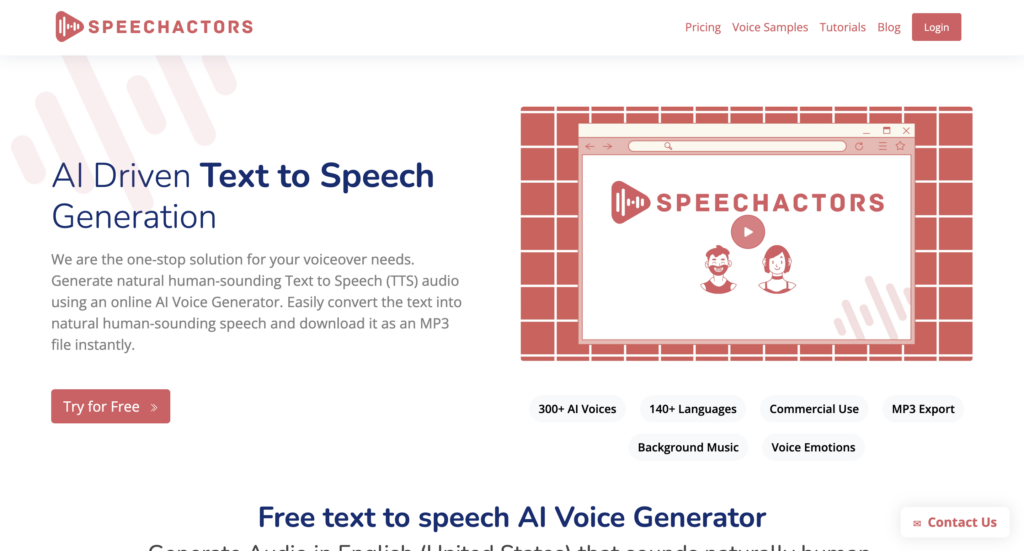
In the past, achieving this level of tone and style control required expensive recording studios and specialized voice talent. Now, platforms like Speechactors are revolutionizing AI voice with features specifically designed to overcome the limitations of robotic, synthetic sound. Speechactors provides a library of professionally designed AI voices, which are trained on massive datasets of human speech patterns, ensuring they retain the subtle nuances of real human delivery.
The platform goes beyond basic text-to-speech by prioritizing tone control, style flexibility, and emotional accuracy, all crucial elements for real-world use cases like long-form narration, compelling advertising spots, and immersive learning content. The core value of a tool like Speechactors is that it gives creators fine-grained control over the vocal performance without needing technical expertise in synthesis. You can easily adjust the “warmth” of the voice for a welcoming introduction or increase the “confidence” for a training module.
This level of control allows content creators to implement all the research-backed principles discussed in this article, turning flat text into expressive, engaging audio. By focusing on generating voices that are not just accurate, but emotionally resonant and contextually appropriate, Speechactors helps organizations achieve the critical goal of higher listener engagement, which translates directly into better business outcomes and more satisfied users.
Key capabilities of Speechactors AI voices
- Human-Like Tone Modulation: Precise control over emotional dimensions such as excitement, calm, sadness, or enthusiasm within the script.
- Multiple Voice Styles Per Language: Access to pre-tuned styles (e.g., ‘Narrative,’ ‘Customer Service,’ ‘E-Learning’) for instant contextual alignment.
- Controlled Pacing and Emphasis: Ability to mark specific words for emphasis and adjust the speech rate and pause length using intuitive controls.
- Natural Emotional Expression: The AI voices are trained to naturally blend tones and styles, avoiding the choppy, sudden emotional shifts often heard in older systems.
Best Practices to Improve Listener Engagement with AI Voices
Improving listener engagement isn’t a one-time fix; it’s an ongoing process of applying evidence-based techniques and continually testing your results. Even with the best AI voice technology, poor implementation can lead to a synthetic, unengaging final product. The key is to shift your focus from simply converting text to speech to actually directing a vocal performance.
This requires editing your written scripts with the AI voice in mind, much like a radio or audiobook producer would edit a human narrator’s performance for maximum impact and clarity. The most successful organizations approach AI voice implementation by creating detailed scripts that include subtle SSML tags or platform-specific controls to dictate the performance.
They actively test different voices and styles with their target audience, using feedback to iterate and refine the delivery. This constant optimization is what keeps the AI voice feeling fresh, relevant, and engaging over time. By following these proven strategies, you can significantly enhance the quality of your audio content, ensuring it resonates authentically with your listeners and drives the desired business results, from information retention to purchase conversion.
Proven optimization strategies
- Match Tone to Content Intent: Always select a tone that complements the message, such as “calm” for complex instructions and “friendly” for welcoming messages.
- Avoid Monotone Delivery: Actively use prosody controls to vary pitch and intonation, ensuring the voice rises and falls naturally throughout the audio.
- Use Natural Pauses: Insert short, strategic pauses, especially at commas and before key concepts, to allow the listener time to process the information.
- Adjust Speed for Clarity: Calibrate the speech rate to ensure clarity for the given content density; slower for technical data, slightly faster for casual conversation.
- Test Voices with Real Listeners: Conduct small-scale A/B tests with your target audience to gather feedback on voice preference, perceived tone, and clarity.
Future Trends in AI Voice Engagement
The journey for AI voices to sound truly and consistently human is far from over. The future of listener engagement lies in real-time, adaptive voice synthesis. Current AI voices are generally static they deliver a pre-determined tone based on the script or a basic context setting. However, the next generation of neural speech synthesis, fueled by massive advancements in machine learning, is moving toward a highly dynamic model where the AI voice can adapt its tone and style instantly.
Pioneering research from groups like Google DeepMind suggests that future AI voices will be able to analyze user input such as an emotional tremor in the user’s voice or a sudden shift in their conversational tone and adjust its own pitch, pace, and empathy level in real time. Imagine an AI customer service agent that can detect a user’s rising frustration and immediately respond with a slower, calmer, more reassuring tone, entirely unscripted.
This level of emotional responsiveness will eliminate the “uncanny valley” effect of AI voices, making the interaction feel completely natural and human-like. For organizations, this means an unprecedented ability to build instantaneous rapport and deliver highly personalized, empathetic auditory experiences, setting the new gold standard for listener engagement.
People Also Ask
What makes an AI voice engaging?
An AI voice becomes engaging when it uses natural tone variation, appropriate emotional expression, and an audience-specific style. It needs to avoid a monotone delivery and use human-like rhythm (prosody) and strategic pauses to make the speech feel alive and easy to process.
Why does tone matter in AI speech?
Tone is crucial because it affects the listener’s perception of clarity, trustworthiness, and emotional connection. The correct tone (e.g., warm, authoritative, calm) ensures the message’s true intent is accurately received, which is essential for building rapport and brand credibility.
How can AI voices sound more human?
AI voices sound more human by implementing granular prosody control (varying pitch, rhythm, and stress), accurate emotional modeling that matches the script, and consistent, natural pacing that avoids the machine-gun effect of overly fast or rigid speech.
What industries benefit most from engaging AI voices?
Education, marketing, customer support, healthcare, and accessibility-driven platforms benefit most. In these sectors, clarity, emotional connection, and retention are paramount, making high-quality, engaging AI voice synthesis a critical success factor for user experience.
Conclusion
Listener engagement with AI voices is no longer an accident; it is a direct result of intentional, research-backed design. Moving beyond simple text-to-speech involves a deep focus on controlling the voice tone, selecting the right style, perfecting prosody, and building emotional intelligence into the delivery. When organizations implement these principles defining a clear brand voice, adapting the tone to different audiences, and leveraging sophisticated tools like Speechactors they create auditory experiences that are not just informational, but truly connecting. Prioritizing voice quality means achieving higher audience trust, better retention rates, and more effective communication across all digital platforms. Don’t let a robotic voice compromise your message; invest in the subtle power of tone and style to connect with your listeners today.